


👋 Hey chef, Elric here! Welcome to this week’s free edition of Outbound Kitchen. Each week I dive into reader questions about creating outbound systems for sustainable growth. Thinking about going paid? Here’s what you’ll unlock right away:
Instant access to 40+ paid newsletters, including:
My Outbound Chef Kit: 130+ resources (20+ email templates, cold call scripts, AI prompts, top tools, and more). Value: $1,000+
And the best part? You can try it free for 7 days. Cancel anytime.
But I think you’ll love it!
👉 Start your free trial today.
“AI is replacing SDRs.”
I keep seeing this on LinkedIn.
So I started tracking the data myself.
Based on my tracking via LinkedIn Sales Navigator:
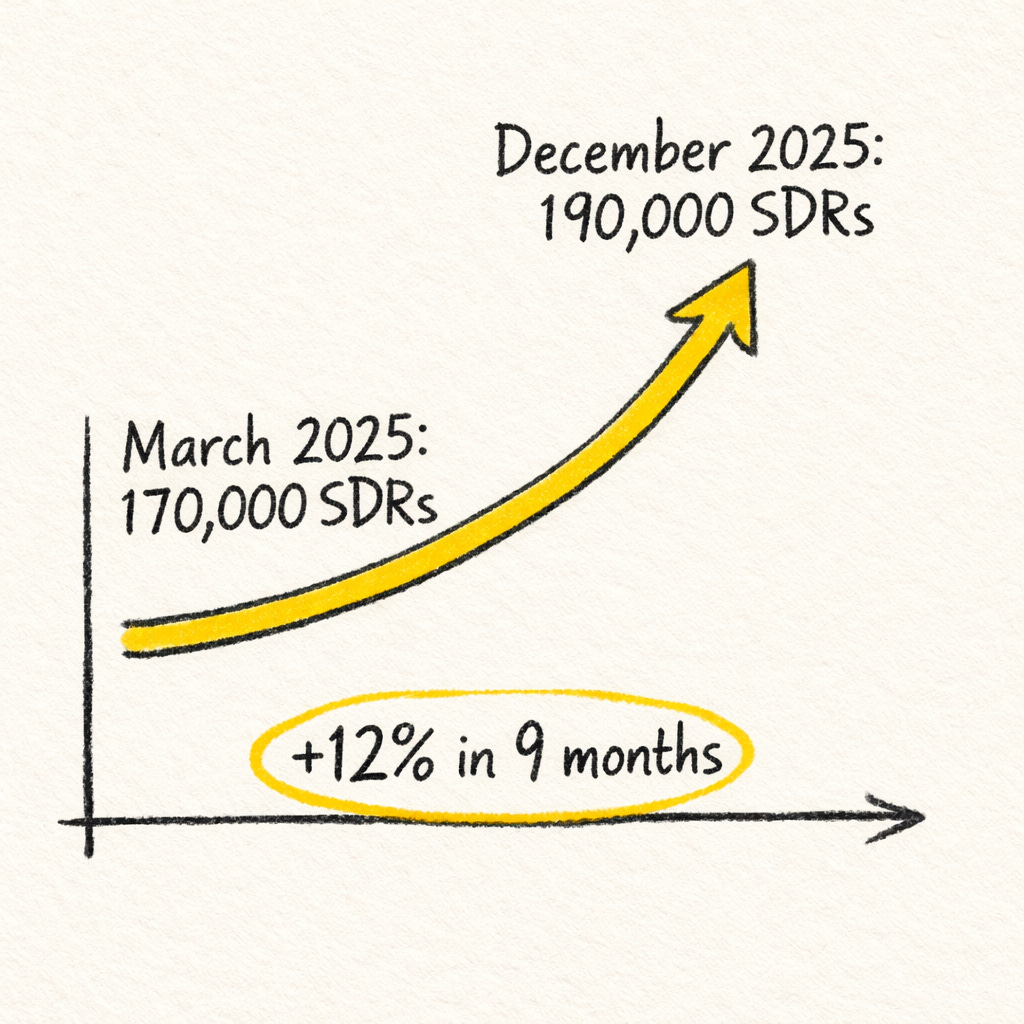
March 2025: 170,000 SDRs globally
December 2025: 190,000 SDRs globally
That’s +20,000 SDRs. +12% growth in 9 months.
AI isn’t replacing SDRs. But something else is happening that most GTM leaders are missing completely.
The Reality Is More Nuanced
I’ve talked to companies that fully replaced their SDR team with AI.
One of them fired their 3 BDRs the day after we spoke. They wanted to do everything with AI. No humans. Full automation.
12 months later, they hired a new Head of BDRs and are rebuilding the team internally.
AI is making productive SDRs more valuable, and unproductive ones redundant.
That word, productive, is what this newsletter is about.
The Economics Are Broken
Let me show you something.
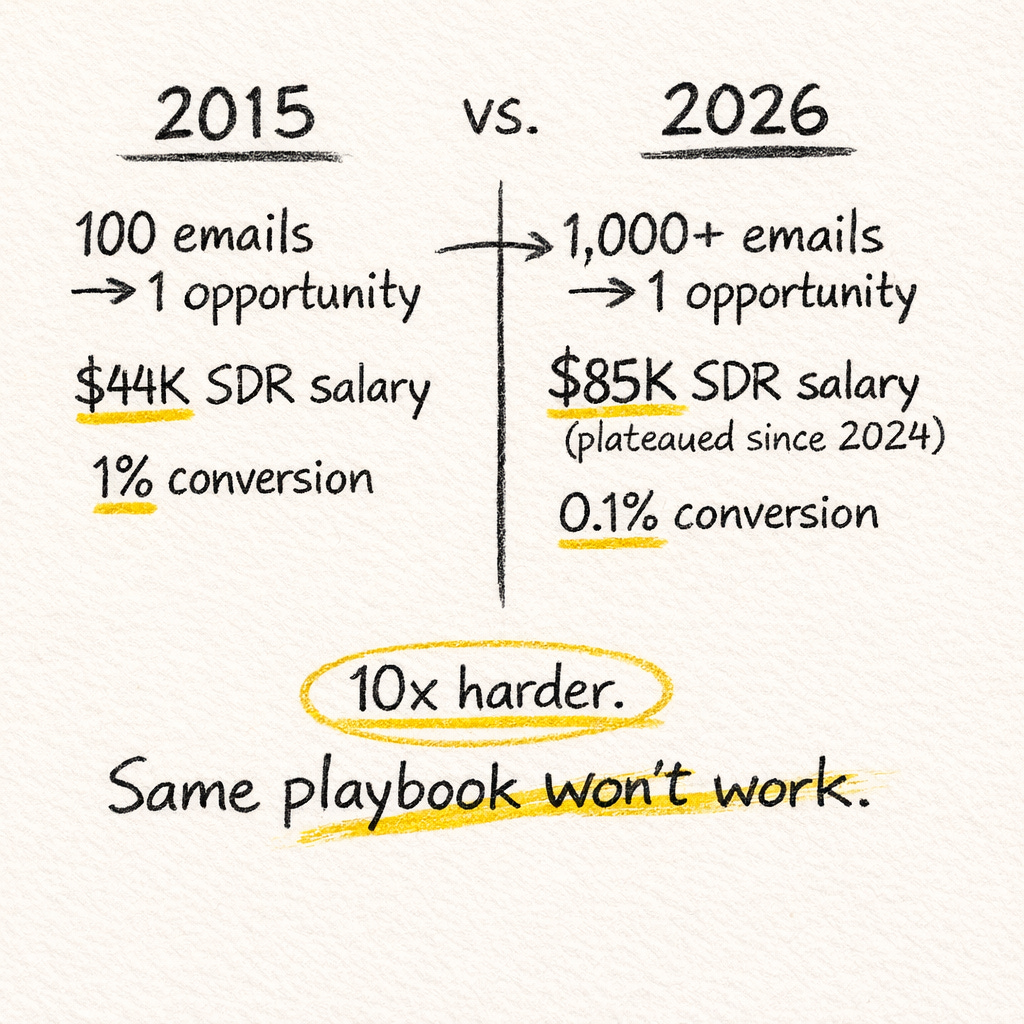
Conversion rates have collapsed:
2015: 100 cold emails → 1 opportunity
2018: 200 attempts → 1 opportunity
2023: 1,000+ attempts → 1 opportunity
That’s a 10x decline in 8 years.
(Source: Book: Revenue Architecture by Jacco van der Kooij, CEO of Winning by Design)
Why the collapse?
It’s saturation. The same thing that happened to digital ads is now happening to outbound:
More SaaS companies, more providers
More sales teams sending more volume
Inboxes are flooded
Most messages aren’t relevant
Buyers are overwhelmed and tuning out
Meanwhile, SDR salaries rose from $44K (2015) to $80K (2024) to $85K today—and now they’ve plateaued.
Here’s the math that should worry you:
Salaries doubled. Conversion rates collapsed 10x. That means your cost per opportunity has increased dramatically, even though salaries have finally stopped rising.
You’re paying more per output than ever before.
Here’s the forcing function:
If conversion rates keep declining, and you can’t reduce headcount costs, and you’re running the same playbook, something has to change.
You can’t out-hire this problem. You can’t out-train it.
There’s only one lever left: Productivity.
The Formula Most Leaders Miss
Most GTM leaders get two out of three things right.
Here’s what I’ve learned working with outbound teams over the past 14 months:
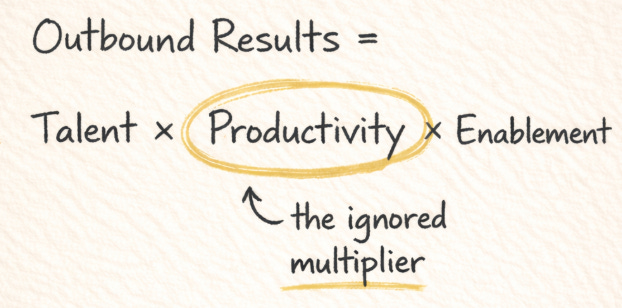
Outbound Results = Talent × Productivity × Enablement
Not addition. Multiplication.
Most leaders invest heavily in two of these:
Talent: Hire more SDRs. Hire experienced reps. Build out the team.
Enablement:Train them. Coach them. Run call reviews. Improve messaging.
Then they step back and say: “Go figure it out.”
It doesn’t work.
Why? Because they’re missing the multiplier: Productivity.
Let me be specific about what I mean by productivity.
It’s not about working harder or spending more hours on the phone. It’s about maximizing the time your team spends on actual prospecting—not on manual tasks that can be automated today.
In 2022, if you wanted to enrich data automatically, you needed technical people to build it. Today? Tools do it for you. AI can extract intelligence from calls, update your CRM, research accounts, all in the background. What wasn’t possible three years ago is now table stakes.
But productivity also means focusing on the right accounts—the ones with the highest chance to convert, at the right time, with the right information. Because if you’re sending generic messages to the wrong companies, it doesn’t matter how many hours your reps work.
Productivity is all of this working together.
Here’s what I saw across 15 companies I worked with in 2025:
They pick one data provider and call it done
They buy one tool and expect magic
They let SDRs figure out the rest on their own
Then they wonder why results aren’t coming
They invest in talent. They invest in enablement. But they underinvest in the systems that make talent and enablement actually work.
If Productivity is low, you can multiply Talent and Enablement all day. The result stays flat.
Why Productivity Gets Ignored
Here’s what I think is happening.
In 2020, maybe even 2024, you could get away with ignoring productivity. Hire people. Train them. Let them grind. Results showed up eventually.
But the environment has changed:
Conversion rates are down 10x
Salaries doubled while output collapsed
Cost per opportunity is at an all-time high
Saturation is increasing
Buyers are harder to reach and quicker to ignore
The old playbook, hire more, train, doesn’t scale anymore. It’s hitting a wall.
Here’s what’s possible when you get productivity right:
If a rep is booking 10 meetings a month with the wrong systems, they should be booking 20 with the right systems.
That’s not a stretch. That’s table stakes.
Top companies like Owner.com and Ramp are getting 3-4x their competitors’ results. And they’re not doing it by hiring 3-4x the headcount.
They’re maximizing productivity per rep before hiring more.
What Productivity Actually Means
This is where most leaders get confused.
Productivity is NOT:
The number of tools you’ve deployed
The automation percentage you can report to the board
Productivity IS:
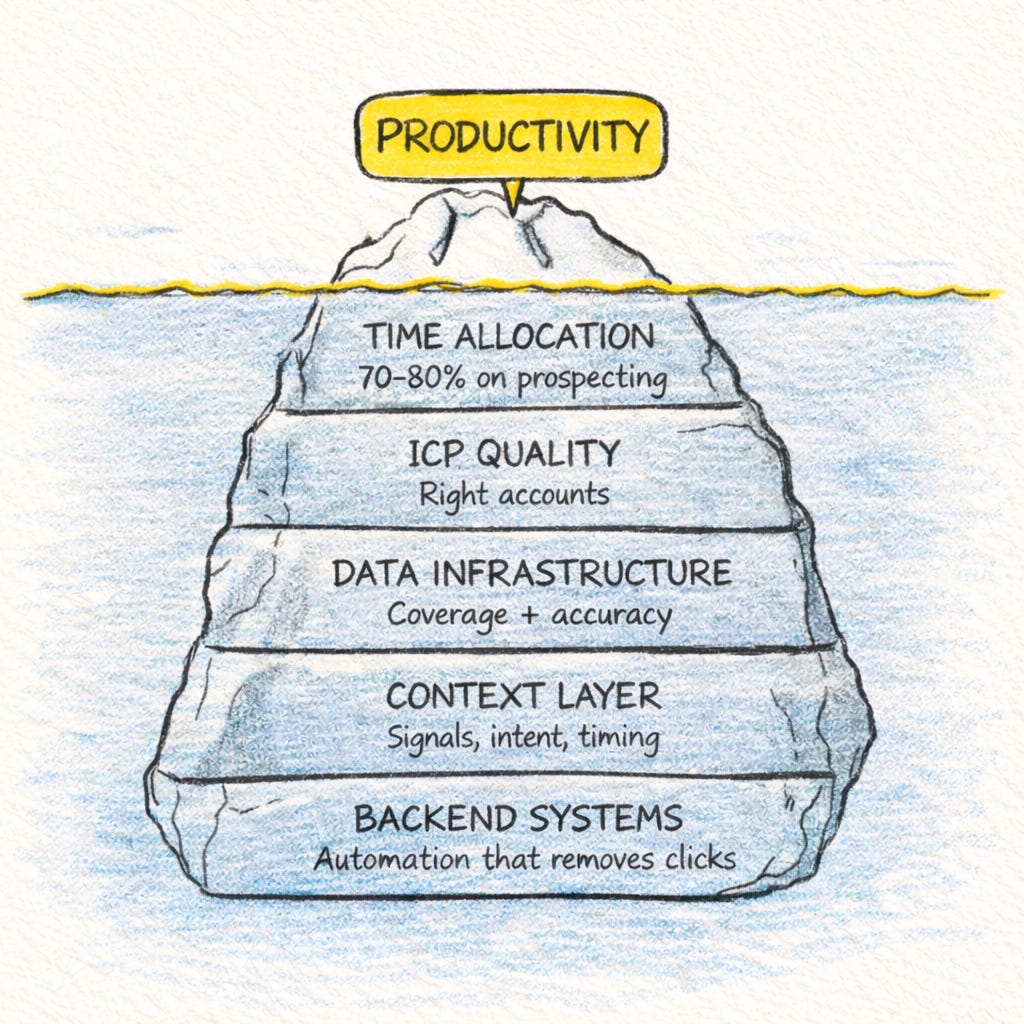
Contacting the right accounts.
Tier 1 accounts convert at 5x the rate of lower tiers. If your reps are spraying across 40,000 accounts instead of focusing on the right 1,000, you’re burning capacity.
Having the right data.
Coverage. Quality. Accurate phone numbers. If 40% of your numbers don’t work, your “productive” calling time is actually 60% productive.
Knowing the context.
Your system should know who’s already familiar with your brand—who’s visited your website, who’s a former champion now at a new company, who’s shown intent. These signals should feed prioritization automatically, not require reps to dig for them.
Removing manual work.
Research, data cleanup, message writing, this should happen in the backend, not eat up rep time.
Maximizing revenue-generating activities.
If an SDR works 40 hours a week, how many of those hours are spent actually prospecting vs. preparing to prospect?
Here’s a simple benchmark:
Your reps will spend ~20% of their time on internal tasks (meetings, 1:1s, admin). That’s unavoidable. The question is what happens with the other 80%. Most teams I see are at 40-50% actual prospecting time. The rest goes to list building, data cleanup, manual research. Best-in-class teams hit 70-80% prospecting time. That gap, from 50% to 80%, is nearly doubling productive capacity with the same headcount.
And this compounds. When your reps ARE prospecting, are they targeting the right accounts? Time on prospecting × ICP quality = actual output. Fix one without the other and you’re still leaving capacity on the table.
One question cuts through the noise: Does this tool add clicks or remove them?
The Backend vs. Frontend Test
Here’s a simple framework you can use immediately.
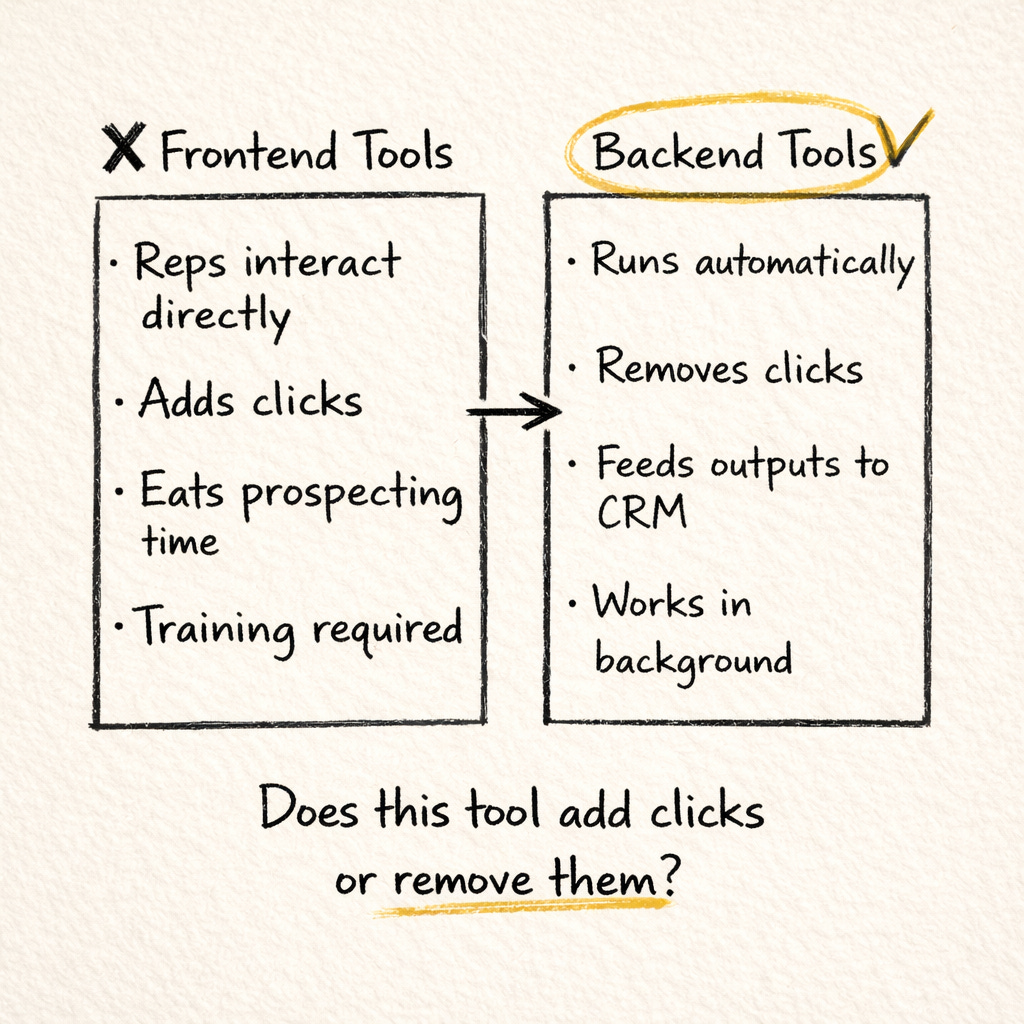
When you’re evaluating a tool, ask: Is this for the backend or the frontend?
Frontend tools = tools reps interact with directly.
They add clicks
They require training
They eat into prospecting time
Backend tools = tools that run automatically.
AI workflows
Data enrichment
Automation that feeds outputs to where reps already work
Most companies buy frontend tools and call it “investing in productivity.”
They’re wrong.
Real productivity investment means building backend infrastructure so your reps can focus on selling:
AI workflows that do account research automatically
Data enrichment that runs on a schedule, not on-demand by reps
Automation that routes the right accounts to the right reps with the right context, already in their CRM
Your reps shouldn’t spend time cleaning data.They should be prospectors.
This Is Complex. That’s The Point.
I’m not going to pretend this is easy.
Building real productivity infrastructure, data systems, backend automation, signal routing, is complex. It requires thinking through a lot of moving pieces that most teams try to do manually.
And here’s the thing: there’s no single tool you can buy to solve this. Each company is different. Some companies, like Pigment, have built their own custom systems from scratch.
Should you build or buy? That’s one of the main questions I’ll be exploring in this newsletter throughout the year. Because it’s not a simple answer, and getting it wrong is expensive.
But that complexity is exactly why it’s a competitive advantage.
Most teams won’t do this work. They’ll keep hiring, keep training, and keep wondering why results aren’t scaling.
The ones who invest in productivity will compound.
What This Means for Your Team
If productivity is the multiplier, here’s what changes:
Maximize output before hiring.
Top outbound teams aren’t scaling headcount first. They’re getting more from each rep before adding more reps. That’s the model.
Bring in Ops earlier.
Most companies wait too long to invest in operations and data roles. If productivity is the multiplier, you need people building the systems, not just people working in them.
Measure what matters.
Stop tracking:
Number of AI tools deployed
Automation percentage
Cost savings
Start tracking:
Time reps spend on revenue-generating activities
Conversion rates by account tier
Data enrichment rate and accuracy
If you can’t measure productivity, you can’t improve it.
The Transformation
Here’s what this looks like in practice.
Before (most teams today):
Reps spend 40+ hours/week, but only 15-20 hours actually prospecting
30-40% of phone numbers don’t work
Every rep sources their own data, does their own research
Results: 10 meetings/month
Cost per meeting: high + increasing
Response: “Hire more reps”
After (productivity-focused teams):
Reps spend 40 hours/week, 30+ hours actually prospecting
Data is validated, enriched, and routed automatically
Research happens in the backend before reps touch accounts
Results: 20-40 meetings/month, consistent or improving
Cost per meeting: low + stable or decreasing
Response: “Maximize before we scale”
Same headcount. 2-4x the output.
That’s what investing in productivity looks like.
Two Questions to Ask Yourself
Before you hire another SDR or schedule another training session, ask:
What high-value activities should your reps focus on exclusively?
What’s currently distracting them that AI/tools/data should handle?
If you can’t answer these clearly, you have a productivity problem.
And no amount of hiring or enablement will fix it.
Why I’m Writing This
This isn’t just about what I’m focused on in 2026.
I’m seeing this as a common challenge across almost every company I talk to. GTM leaders are stuck, conversion rates are declining, cost per opportunity is rising, and the old playbook isn’t working. But most don’t know where to start fixing it.
Productivity is complex to solve. There’s no single tool, no quick fix. It requires rethinking how your systems work together.
That’s exactly why I’m excited to dive deep into this topic this year.
Whether it’s the newsletter, the podcast, or the work I do with customers—productivity is the thread that ties it all together. I’ve been working on this with customers throughout 2025, and I’m going all-in on it in 2026.
This newsletter is just the beginning. More to come.
If you want to explore what this looks like for your team, reply to this email. Let’s talk.
Elric
Coming in January based on your questions:
TAM vs SAM vs ICP (updated version) → Next week
Outbound dashboards and reporting for exec/board meetings
How I use Clay as my outbound orchestration layer
Also posting in January:
Best mobile data provider in North America for 2025
Outbound benchmarks for 2025
The podcast is back too. If you missed the first episode of the year, listen here.
Thinking about upgrading to the paid newsletter? Here’s what you’ll get:
Instant access to 40+ paid newsletters, including:
My Outbound Chef Kit: 130+ resources: 20+ email templates, cold call scripts, AI prompts, top outbound tools, and more, everything the best outbound teams use. Worth $1,000+
And the best part? You can try it free for 7 days. Cancel anytime.
But I think you’ll love it!
👉 Start your free trial today.
As soon as you’re ready, here’s how I can help:
Outbound Consulting Call: Need quick help? Book a 40-min session here.
Outbound Private Chef:
Part-time, I’ll build, optimize efficiency, and execute your outbound strategy.
Coaching/Advising: get tailored advice to fix your strategy, boost efficiency, and drive results.
Interested? Reply to this email or hit me up at bonjour@elriclegloire.com
Vraiment quali, as usual tu me diras
I've seen that play out over the last 10-15 years. I knew inboxes were ridiculously saturated, but 1,000 emails to book 1 meeting is shocking.